
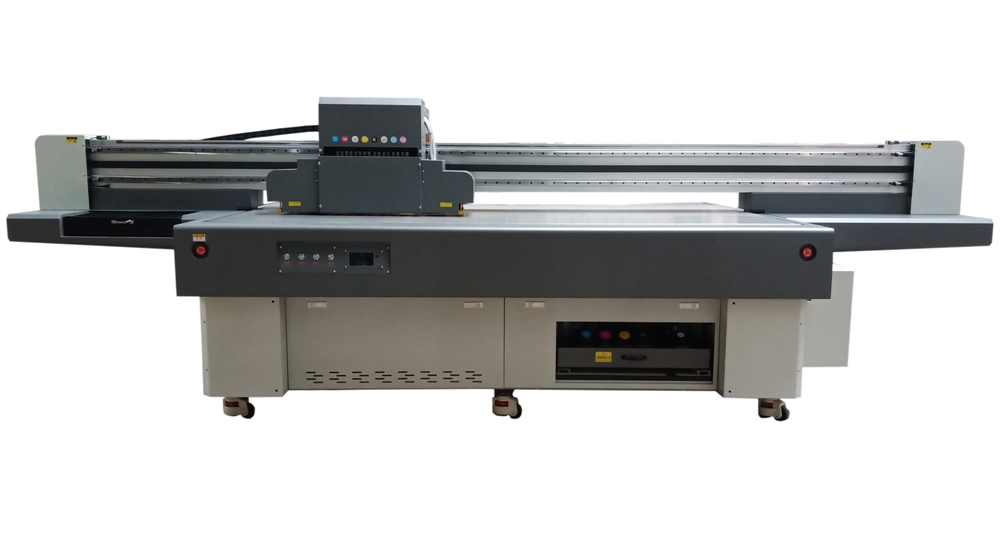
The coverage of UV flatbed printers is growing rapidly. The biggest highlight of UV flatbed printing lies in the diversification of its printing substrates. It can achieve high-quality printing results on materials that could not be printed on before, such as glass, ceramics, metals, acrylics, and wood. However, UV inks have poor adhesion on the surfaces of glass, ceramics, metals, acrylics, and some smooth woods, and are easy to peel off. Therefore, using flatbed printer coatings to help UV inks adhere is a very important process.
However, UV flatbed printer coatings have not been around for a long time, and the quality of coatings sold on the market varies. Inferior coatings not only damage the quality of printed products but also cause harm to the machine. How to correctly select UV flatbed printer coatings is the information I want to share with you below, and the following 6 aspects need to be noted:
First, adhesion: There are various methods to measure adhesion, such as the cross-cut test. If the quality requirements for printed products are high, you can also test whether the printed products fall off after being immersed in water or after boiling the printed images. Adhesion is the key to measuring the quality of UV flatbed printer coatings. High-quality coatings should pass the cross-cut test and not fall off after being soaked or boiled in water.
Second, leveling property: Leveling property is a common performance index in coatings. It refers to the ability of a coating, after being brushed or sprayed on the surface of an object, to automatically flow and spread into a flat and smooth surface from brush marks and spray fog particles that appear on the film. UV flatbed printer coatings with poor leveling property will affect the decorative effect of printed matter. More importantly, if the brush marks on the coating surface do not disappear automatically, the uneven coating surface may rub against the UV flatbed printer nozzle, causing heavy losses. High-quality coatings should have a strict formula and level quickly after being brushed or sprayed.
Third, film-forming transparency: As high-value-added decorative products, UV printed products generally have high requirements for appearance. This requires the UV flatbed printer coating to form a colorless and transparent film. Currently, some two-component coatings based on epoxy resin on the market turn yellow when forming a film, which affects the decorative effect.
Fourth, weather resistance: For UV printed products, especially signs and billboards used outdoors, the printed products must remain bright as new for a long time without fading. Specifically, this requires the UV flatbed printer coating to have the function of resisting ultraviolet rays. Some coatings on the market will turn yellow under long-term light conditions, making them unsuitable for outdoor use. Even for UV printed products used only indoors, it is generally necessary to consider using UV flatbed printer coatings with weather resistance to ensure product quality.
Fifth, ease of use: Currently, UV flatbed printer coatings on the market include two-component and multi-component products. Compared with multi-component products, one-component UV flatbed printer coatings that do not require mixing have greater advantages in use.
Sixth, product safety: This is a problem that must be considered. Solvent-based UV flatbed printer coatings not only have a strong odor but also pose safety hazards if stored improperly and are inconvenient to transport. Due to the high investment in UV flatbed printers, it is better to consider safer water-based UV flatbed printer coatings when selecting UV flatbed printer coatings. If solvent-based coatings must be used, it is recommended to store them separately from UV flatbed printers to eliminate safety hazards.
The coverage of UV flatbed printers is growing rapidly. The biggest highlight of UV flatbed printing lies in the diversification of its printing substrates. It can achieve high-quality printing results on materials that could not be printed on before, such as glass, ceramics, metals, acrylics, and wood. However, UV inks have poor adhesion on the surfaces of glass, ceramics, metals, acrylics, and some smooth woods, and are easy to peel off. Therefore, using flatbed printer coatings to help UV inks adhere is a very important process.
However, UV flatbed printer coatings have not been around for a long time, and the quality of coatings sold on the market varies. Inferior coatings not only damage the quality of printed products but also cause harm to the machine. How to correctly select UV flatbed printer coatings is the information I want to share with you below, and the following 6 aspects need to be noted:
First, adhesion: There are various methods to measure adhesion, such as the cross-cut test. If the quality requirements for printed products are high, you can also test whether the printed products fall off after being immersed in water or after boiling the printed images. Adhesion is the key to measuring the quality of UV flatbed printer coatings. High-quality coatings should pass the cross-cut test and not fall off after being soaked or boiled in water.
Second, leveling property: Leveling property is a common performance index in coatings. It refers to the ability of a coating, after being brushed or sprayed on the surface of an object, to automatically flow and spread into a flat and smooth surface from brush marks and spray fog particles that appear on the film. UV flatbed printer coatings with poor leveling property will affect the decorative effect of printed matter. More importantly, if the brush marks on the coating surface do not disappear automatically, the uneven coating surface may rub against the UV flatbed printer nozzle, causing heavy losses. High-quality coatings should have a strict formula and level quickly after being brushed or sprayed.
Third, film-forming transparency: As high-value-added decorative products, UV printed products generally have high requirements for appearance. This requires the UV flatbed printer coating to form a colorless and transparent film. Currently, some two-component coatings based on epoxy resin on the market turn yellow when forming a film, which affects the decorative effect.
Fourth, weather resistance: For UV printed products, especially signs and billboards used outdoors, the printed products must remain bright as new for a long time without fading. Specifically, this requires the UV flatbed printer coating to have the function of resisting ultraviolet rays. Some coatings on the market will turn yellow under long-term light conditions, making them unsuitable for outdoor use. Even for UV printed products used only indoors, it is generally necessary to consider using UV flatbed printer coatings with weather resistance to ensure product quality.
Fifth, ease of use: Currently, UV flatbed printer coatings on the market include two-component and multi-component products. Compared with multi-component products, one-component UV flatbed printer coatings that do not require mixing have greater advantages in use.
Sixth, product safety: This is a problem that must be considered. Solvent-based UV flatbed printer coatings not only have a strong odor but also pose safety hazards if stored improperly and are inconvenient to transport. Due to the high investment in UV flatbed printers, it is better to consider safer water-based UV flatbed printer coatings when selecting UV flatbed printer coatings. If solvent-based coatings must be used, it is recommended to store them separately from UV flatbed printers to eliminate safety hazards.
Reprinted from http://www.inknet.cn/